Non-Invasive Treatments · Endoscopic Unit · Ludhiana, Punjab

Microwave Ablation

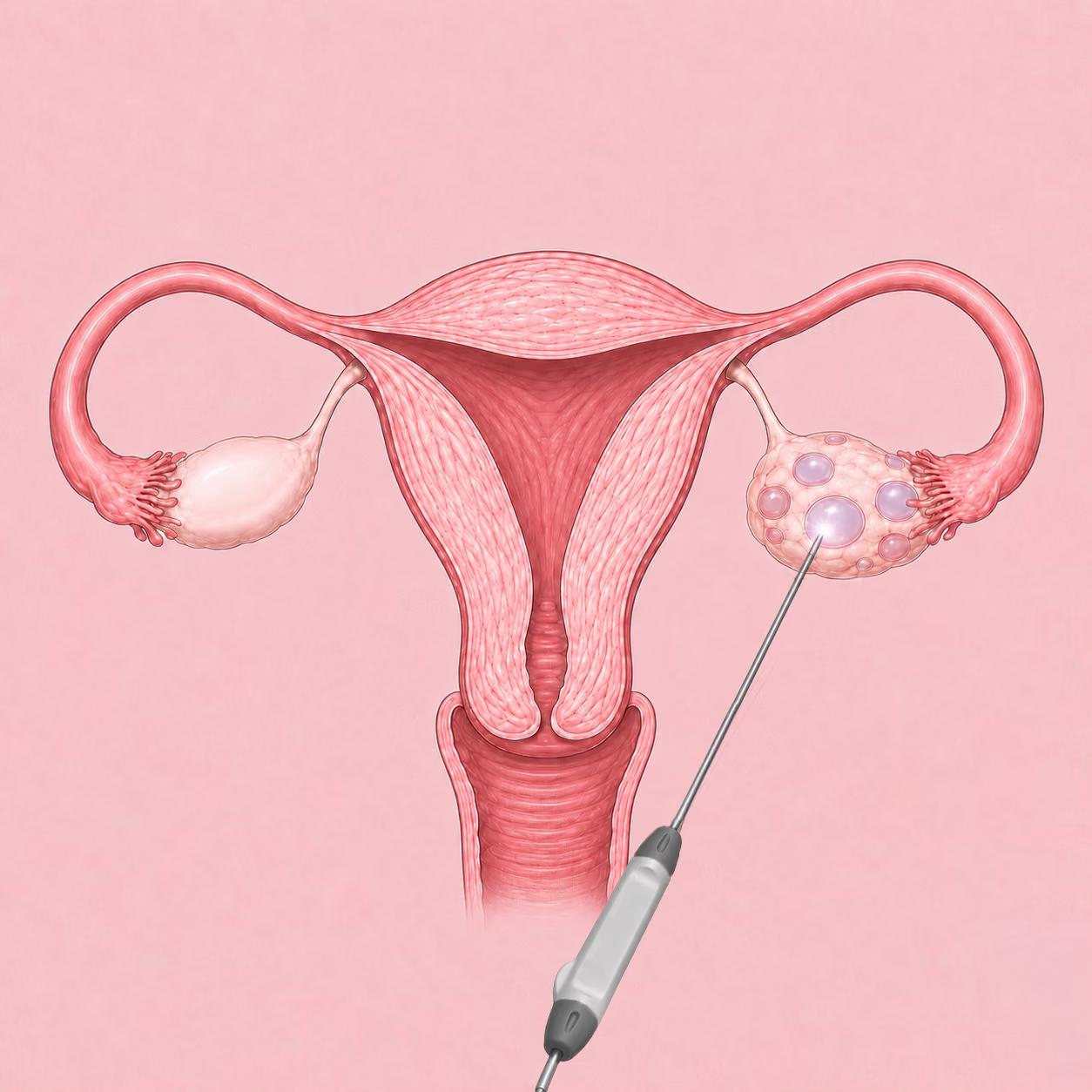
A modern, minimally invasive procedure that destroys abnormal tissue — most commonly fibroids, ovarian cysts, endometriomas, and selected pelvic lesions — using high-frequency microwaves, with precision, minimal blood loss, and quick recovery.

Approach

Minimally invasive

Focus

Fertility-preserving

Recovery

Often 24–48 hours

Guidance

Image / laparoscopic

What Is Microwave Ablation (MWA)?

Microwave Ablation (MWA) is a modern, minimally invasive procedure used to destroy abnormal tissue — most commonly fibroids, ovarian cysts, endometriomas, and certain pelvic lesions — using high-frequency microwaves. These microwaves create heat at the target tissue, causing controlled destruction (thermal ablation) without damaging healthy surrounding structures.

MWA is especially valuable in fertility-preserving gynaecological care, where accuracy, minimal blood loss, and quick recovery are essential.

Key Benefits Of Microwave Ablation

  • Minimally invasive — requires only a small needle insertion, no large incisions.
  • Fertility-preserving — targets the lesion precisely while preserving surrounding ovarian and uterine tissue.
  • Very quick recovery — most patients return to routine work in 24–48 hours.
  • Low blood loss — heat seals blood vessels instantly, reducing bleeding risk.
  • Short procedure time — ablation usually takes 5–10 minutes per lesion.
  • Ideal for those unfit for major surgery — suitable for selected patients with medical comorbidities.

When Is Microwave Ablation Recommended?

Uterine Fibroids

  • Intramural, subserosal, and certain deep fibroids
  • Multiple fibroids in selected cases
  • Symptomatic fibroids causing heavy bleeding, pain, or infertility

Ovarian Endometriomas

  • When cysts are recurrent
  • When cyst wall excision might reduce ovarian reserve
  • Useful for patients planning IVF

Adenomyosis (Focal Or Diffuse — Selected Cases)

  • Reduces bulk and pain
  • Suitable for women who wish to preserve the uterus

Pelvic Tumours Or Benign Lesions

  • Small, well-localised, non-cancerous growths

How Does Microwave Ablation Work? Step-By-Step

01

Imaging Guidance

Performed under ultrasound, CT, or laparoscopic guidance for accurate probe placement.

02

Probe Insertion

A thin microwave antenna is inserted through a tiny needle puncture (about 2–3 mm).

03

Microwave Energy Delivery

The probe emits microwave energy (900–2450 MHz), rapidly heating tissue to 60–100°C.

04

Controlled Tissue Destruction

Targeted abnormal cells are destroyed while surrounding areas remain protected.

05

Natural Healing

The ablated tissue shrinks over weeks and is naturally absorbed by the body.

Who Is The Right Candidate?

  • Women wanting fertility-preserving fibroid treatment
  • IVF patients with endometriomas
  • Women who cannot undergo major surgery
  • Patients with recurrent cysts
  • Those seeking short downtime with quick recovery

How MWA Compares

MWA Vs Cystectomy For Endometrioma

  • Cystectomy can remove healthy ovarian tissue and reduce AMH
  • MWA aims to preserve ovarian reserve
  • Often less recurrence compared with drainage alone

MWA Vs Radiofrequency Ablation (RFA)

  • Faster heating
  • Larger, more uniform ablation area
  • Shorter procedure time
  • Lower failure rate in selected comparisons

Success Rate Of Microwave Ablation

Fibroids

  • 70–90% symptom relief
  • 40–60% size reduction over 3–6 months

Endometriomas

  • 50–80% reduction in size
  • AMH preservation often better than excision

Adenomyosis

  • Significant pain relief in selected cases
  • Improved quality of life

Recovery After Microwave Ablation

Most patients experience mild cramping for 24–48 hours, minimal spotting, and return to normal routine within 1–2 days.

  • Pain medication if required
  • Avoid strenuous activity for 48 hours
  • Follow-up ultrasound in 1–3 months

Risks & Complications (Rare)

Although MWA is generally very safe, possible complications include minor burns or skin irritation at the puncture site, temporary low-grade fever, and — very rarely — infection or organ injury (under 0.5%). Image-guided technique and experienced specialists help keep risks low.

Why Choose Dr. Rama Sofat Hospital For Microwave Ablation?

  • More than 55+ years of surgical excellence
  • Performed by expert gynaecologic laparoscopic surgeons
  • Advanced image-guided ablation approach
  • Focus on fertility preservation
  • Minimal downtime with same-day discharge in suitable cases
  • Works seamlessly for IVF patients preparing for treatment

Frequently Asked Questions

Is Microwave Ablation painful?

Most patients experience only mild cramping for 24–48 hours. The procedure is performed with appropriate anaesthesia or sedation as advised by your specialist.

How soon can I return to normal activity?

Many patients return to routine work within 24–48 hours. Strenuous activity is usually avoided for about 48 hours.

Does Microwave Ablation help fertility?

MWA is designed to target the lesion precisely while aiming to preserve surrounding ovarian and uterine tissue — making it especially useful in fertility-focused care and for selected IVF patients.

Considering Microwave Ablation?

Speak with our specialists about whether MWA is right for your fibroids, endometrioma, or adenomyosis — with a focus on fertility preservation and faster recovery.

Contact Us