Cryopreservation / Fertility Preservation
Fertility Preservation
At Dr. Rama Sofat Hospital, we offer advanced cryopreservation — egg, sperm, and embryo freezing — to help individuals and couples protect their ability to conceive in the future.

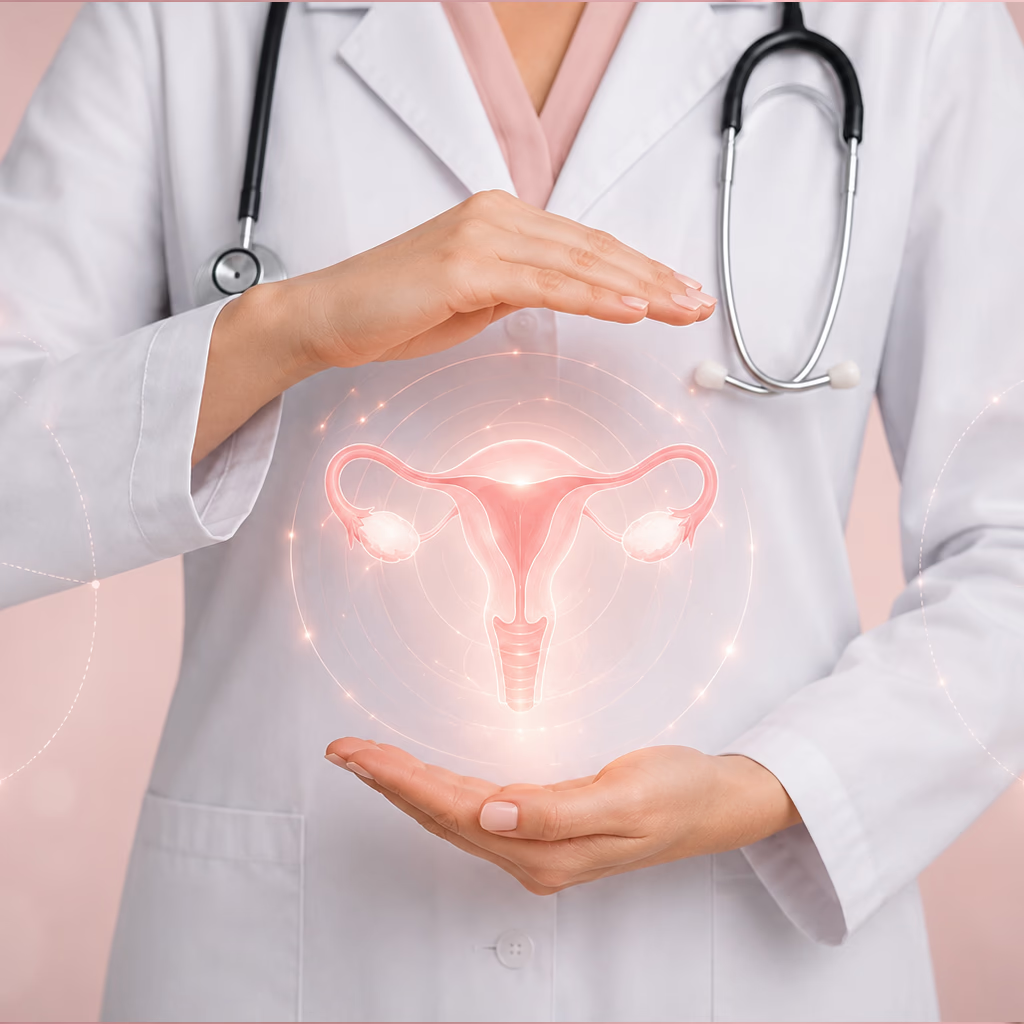
Cryopreservation / Fertility Preservation
At Dr. Rama Sofat Hospital, we offer advanced cryopreservation services — including egg, sperm, and embryo freezing — designed to help individuals and couples protect their ability to conceive in the future.
With over 55 years of trusted experience in fertility care, our centre in Ludhiana provides world-class cryopreservation facilities under the guidance of Dr. Ruchika Sofat and Dr. Amit Sofat and their expert embryology team.
What Is Fertility Preservation?
Fertility preservation involves freezing and storing reproductive cells (eggs, sperm, or embryos) for future use. Frozen eggs are fertilized by ICSI; frozen sperm may be used for IUI, IVF, or ICSI; frozen embryos can be transferred in a future cycle when the couple is ready to conceive.
Egg Freezing (Oocyte Cryopreservation)
Egg freezing, also known as oocyte cryopreservation, is an advanced fertility preservation technique that allows women to store their eggs (oocytes) for future use.
It gives women the freedom to plan motherhood when they're emotionally, medically, or financially ready - without compromising their fertility potential.
At Dr. Rama Sofat Hospital, Ludhiana's trusted fertility centre with over 55 years of legacy, we offer world-class egg freezing facilities using the latest vitrification technology that ensures maximum egg survival and future pregnancy success.
What Is Egg Freezing?
Egg freezing is a medical process where a woman's eggs are collected, frozen, and stored at extremely low temperatures (-196°C) in liquid nitrogen. These eggs can later be thawed and fertilized through ICSI when the woman decides to conceive.
This technology helps preserve fertility for women who may not be ready to start a family right now but want to maintain the chance of having a biological child in the future.
Who Should Consider Egg Freezing?
Egg freezing is recommended for:
- Women who want to delay motherhood due to career, education, or personal reasons.
- Those diagnosed with cancer or other medical conditions requiring chemotherapy or radiation.
- Women with a family history of early menopause or declining ovarian reserve.
- Patients undergoing IVF treatment who prefer to freeze eggs for future use.
- Single women who want to secure their fertility for later.
Step-by-Step Egg Freezing Process
At Dr. Rama Sofat Hospital, Egg freezing is performed by experienced fertility specialists and embryologists in a state-of-the-art IVF lab.
- 1
Consultation and Ovarian Assessment
Hormonal tests and an ultrasound scan are done to evaluate ovarian reserve and create a personalized stimulation plan.
- 2
Ovarian Stimulation
You will take hormonal injections for 8-12 days to stimulate your ovaries to produce multiple mature eggs.
- 3
Monitoring and Egg Retrieval
When the follicles are ready, eggs are retrieved using a minor procedure under mild anaesthesia. It is painless and takes around 15-20 minutes.
- 4
Vitrification (Freezing)
The retrieved mature eggs are flash-frozen using advanced vitrification technology, which prevents ice crystal formation and preserves the egg's quality.
- 5
Cryostorage
Frozen eggs are stored safely in special cryotanks at -196°C until you decide to use them.
Benefits Of Egg Freezing
- Preserves fertility at a younger age for better success rates later.
- Provides reproductive freedom and flexibility.
- Helps women facing medical treatments like chemotherapy or radiation.
- Enables use of own eggs for ICSI in the future.
- Gives peace of mind and control over family planning.
Success Rate Of Egg Freezing
With modern vitrification methods, egg survival rates after thawing are around 95-98%.
At Dr. Rama Sofat Hospital, our expert embryology team ensures high-quality egg selection, proper freezing, and successful fertilization during future ICSI cycles.
Success also depends on:
- Age at the time of freezing
- Number and quality of eggs frozen
- Overall reproductive health
How Long Can Eggs Be Stored?
Frozen eggs can be safely stored for 10-15 years (or longer) without losing their potential. When you're ready to conceive, the eggs are thawed, fertilized by ICSI with your partner's or donor's sperm, and the resulting embryo is transferred to your uterus.
Sperm Freezing (Semen Cryopreservation)
Sperm freezing, also known as semen cryopreservation, is a safe and reliable method to preserve male fertility for future use. It involves collecting, analyzing, and freezing sperm samples at extremely low temperatures so they can be used later for assisted reproductive treatments like IUI, IVF, or ICSI.
At Dr. Rama Sofat Hospital, Ludhiana's leading fertility and IVF centre, we provide advanced sperm freezing and storage services for men who wish to safeguard their reproductive potential for personal, medical, or professional reasons.
What Is Sperm Freezing?
Sperm freezing is a laboratory process where a man's semen sample is collected and frozen using liquid nitrogen at -196°C. The frozen sperm remain viable for many years and can be thawed and used whenever needed.
This method is commonly used by men before undergoing medical treatments, by sperm donors, or by couples undergoing fertility procedures.
Who Should Consider Sperm Freezing?
Sperm freezing is highly recommended for:
- Men undergoing cancer treatment such as chemotherapy or radiation
- Those preparing for surgery that may affect fertility
- Men with low sperm count or poor sperm quality
- Couples undergoing IVF or ICSI treatment
- Men who work in high-risk professions (e.g., military, travel-intensive jobs)
- Individuals planning vasectomy but wanting to preserve the option for future pregnancy
- Donors contributing sperm for fertility treatments
The Sperm Freezing Process
At Dr. Rama Sofat Hospital, the sperm freezing process is simple, safe, and handled with complete confidentiality.
- 1
Consultation and Sample Collection
The process starts with a consultation. A semen sample is collected by the male partner through masturbation in a private collection room at our centre. In special cases, samples can also be obtained through testicular aspiration or surgical extraction.
- 2
Semen Analysis
Our embryologists evaluate the semen for sperm count, motility, and morphology to determine sample quality.
- 3
Cryoprotectant Addition
A cryoprotectant solution is added to the sperm to prevent damage during freezing.
- 4
Freezing (Cryopreservation)
The sample is gradually cooled and then stored in liquid nitrogen tanks at -196°C to preserve sperm cells in suspended animation.
- 5
Long-Term Storage
Frozen sperm can be stored for several years. When needed, it is thawed, tested for viability, and used for fertility treatments like IUI, IVF, or ICSI.
Benefits Of Sperm Freezing
- Preserves fertility before medical treatments or surgeries.
- Useful for men with irregular sperm parameters.
- Provides reproductive flexibility for couples and individuals.
- Ensures sperm availability during IVF or ICSI cycles.
- Simple, affordable, and non-invasive process
- Long-term storage with minimal quality loss
Success Rate Of Frozen Sperm
With modern cryopreservation technology, frozen sperm survival rates are 90-95% after thawing.
Pregnancy rates using frozen sperm are comparable to those using fresh sperm, especially when used for IVF or ICSI.
At Dr. Rama Sofat Hospital, we maintain strict quality control, precise temperature monitoring, and expert handling to ensure maximum post-thaw viability.
Sperm Storage Duration
Frozen sperm can be stored for 10-15 years or more without losing fertility potential.
Many men successfully use frozen sperm years later to conceive healthy babies.
Egg Freezing — Frequently Asked Questions
Q1. Is egg freezing painful?
Q2. Can I get pregnant naturally after freezing my eggs?
Q3. What is the best age for egg freezing?
Q4. Are babies from frozen eggs healthy?
Sperm Freezing — Frequently Asked Questions
Q1. Is sperm freezing painful?
Q2. Does sperm freezing affect sperm quality?
Q3. Can frozen sperm be used for IVF or ICSI?
Q4. How long can sperm remain frozen?
Q5. How many samples should I freeze?
Preserve Your Fertility Today
Cryopreservation gives you the freedom to plan parenthood on your own timeline — whether through egg or sperm freezing.
At Dr. Rama Sofat Hospital, our experienced fertility team uses the safest and most advanced methods to preserve your eggs with maximum success and care.
Book your consultation today to discuss cryopreservation with our fertility specialists and take the first step towards protecting your reproductive future.
Book a consultation
Connect with our fertility specialists at Dr. Rama Sofat Hospital, Ludhiana.