Medical Therapy
Hormonal medicines or intrauterine devices (Mirena IUD) to reduce bleeding and pain. Temporary symptom control for mild disease or perimenopausal women.
Laparoscopic Uterine Surgeries · Ludhiana, Punjab
Relieving pain, preserving fertility — advanced laparoscopic adenomyomectomy using state-of-the-art 4K HD systems to precisely remove diseased tissue, reconstruct the uterine wall, and restore natural function with minimal pain and rapid recovery.

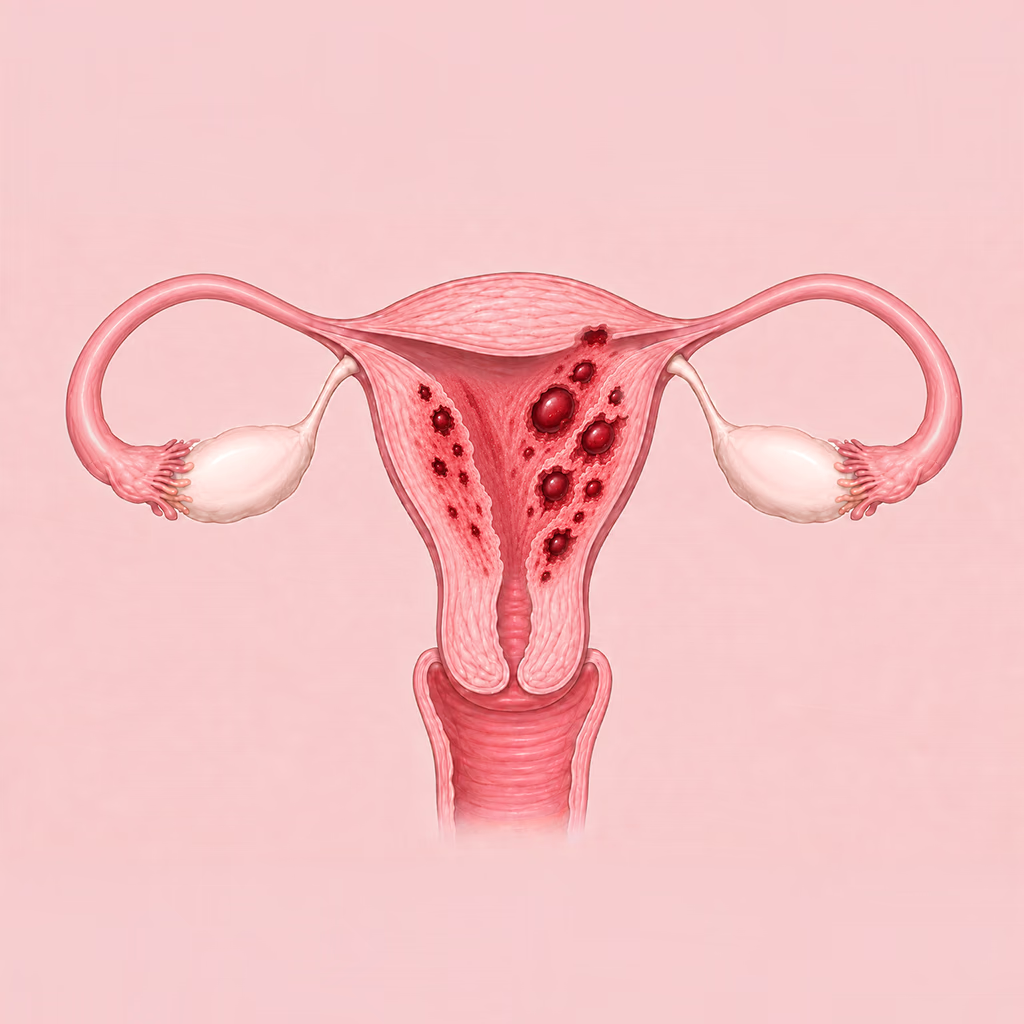
Adenomyoma is a hidden yet powerful cause of severe menstrual pain, heavy bleeding, and infertility in women of reproductive age. It occurs when the inner lining of the uterus (endometrium) grows deep into its muscular wall, forming a localised mass that leads to an enlarged, tender, and painful uterus. For many women, this condition quietly disrupts everyday life causing exhaustion, discomfort, and difficulty conceiving.
At Dr Rama Sofat Hospital, Ludhiana, we bring hope through advanced laparoscopic adenomyoma surgery, a precise and minimally invasive technique that removes the diseased tissue while preserving the uterus and fertility. Using state-of-the-art 4K and HD laparoscopic systems, our skilled surgeons delicately excise the adenomyoma, reconstruct the uterine wall, and restore its natural function ensuring minimal pain, rapid recovery, and long-lasting relief.
Our approach goes beyond surgery — we combine expert diagnosis, fertility-focused planning, and holistic postoperative care to help every woman regain comfort, hormonal balance, and confidence in her body.
Adenomyoma most commonly affects women between 30–50 years of age, especially those who have had multiple pregnancies or uterine surgeries such as a caesarean section.
Recent studies show that up to 20% of women presenting with chronic pelvic pain or heavy menstrual bleeding have underlying adenomyosis or adenomyoma.
Adenomyomas are not cancerous and rarely turn malignant. However, they can cause severe menstrual pain, heavy bleeding, anaemia, and infertility if left untreated. Because their symptoms mimic fibroids, accurate diagnosis is vital to ensure proper treatment and uterine preservation.
The exact cause is unclear, but several risk factors contribute:
Symptoms often worsen gradually, so early detection makes a major difference.
At Dr Rama Sofat Hospital, Ludhiana, adenomyoma is diagnosed using advanced fertility-oriented imaging:
Accurate diagnosis helps design a personalised treatment plan focused on pain relief and fertility preservation.
Untreated adenomyoma can significantly affect quality of life:
Holistic management not only relieves pain but also restores hormonal balance and fertility potential.
Consult a gynaecologist in Ludhiana if you experience:
Early medical evaluation prevents complications and helps preserve the uterus.
Treatment depends on symptoms, severity, and fertility goals.
Hormonal medicines or intrauterine devices (Mirena IUD) to reduce bleeding and pain. Temporary symptom control for mild disease or perimenopausal women.
At Dr Rama Sofat Hospital, we perform fertility-preserving laparoscopic surgery to precisely remove the adenomyoma while reconstructing the uterus.
How is the Surgery Performed?
Keyhole Incisions
3–4 small incisions are made in the abdomen.
Visualisation
A laparoscope (tiny camera) is inserted to give a magnified view of the uterus.
Precise Dissection
The surgeon carefully identifies and removes the adenomyotic tissue or adenomyoma while preserving surrounding healthy muscle.
Uterine Reconstruction
The uterus is meticulously repaired and reconstructed using layered sutures to restore normal strength and shape.
Closure
Incisions are closed neatly with minimal scarring.
Using 4K HD Laparoscopy, Our Specialists
Total laparoscopic hysterectomy (TLH) reserved only for women who have completed their family and have severe or recurrent adenomyoma.
Adenomyoma can interfere with conception by distorting the uterine cavity or altering implantation. Laparoscopic removal enhances fertility by:
Our fertility-preserving approach ensures the uterus remains capable of supporting a healthy pregnancy.
While adenomyoma cannot always be prevented, symptoms can be managed with:
| Myth | Fact |
|---|---|
| Adenomyoma is the same as fibroid | They are different — fibroids are muscular tumours, while adenomyomas are glandular–muscular growths. |
| It always needs uterus removal | Modern laparoscopic surgery can remove adenomyoma while preserving fertility. |
| It's a rare condition | It's relatively common but often under-diagnosed. |
| Medicine alone can cure it | Medication controls symptoms but does not remove the lesion. |
| Adenomyoma never affects fertility | It can significantly reduce conception chances if untreated. |
Yes, it is safe and effective when performed by skilled laparoscopic surgeons.
Most patients return to normal activities within 7–10 days.
Recurrence is uncommon with complete excision, though regular follow-ups are advised.
No, laparoscopic adenomyomectomy actually improves fertility outcomes.
Usually after 3–6 months, once the uterus has fully healed.
If you're suffering from adenomyoma, heavy bleeding, or pelvic pain, book your consultation with Dr Amit Sofat and Dr Ruchika Sofat at Dr Rama Sofat Hospital, Ludhiana.