Fertility Treatment
Intrauterine Insemination IUI
IUI is one of the most commonly recommended fertility treatments for couples struggling to conceive naturally. It is a minimally invasive and affordable procedure that increases the chances of pregnancy by placing specially prepared sperms directly into the uterus at the time of ovulation.
At Dr. Rama Sofat Hospital, our fertility experts perform IUI with precision, care, and personalised protocols to help couples achieve parenthood.

Overview Of IUI
What Is IUI?
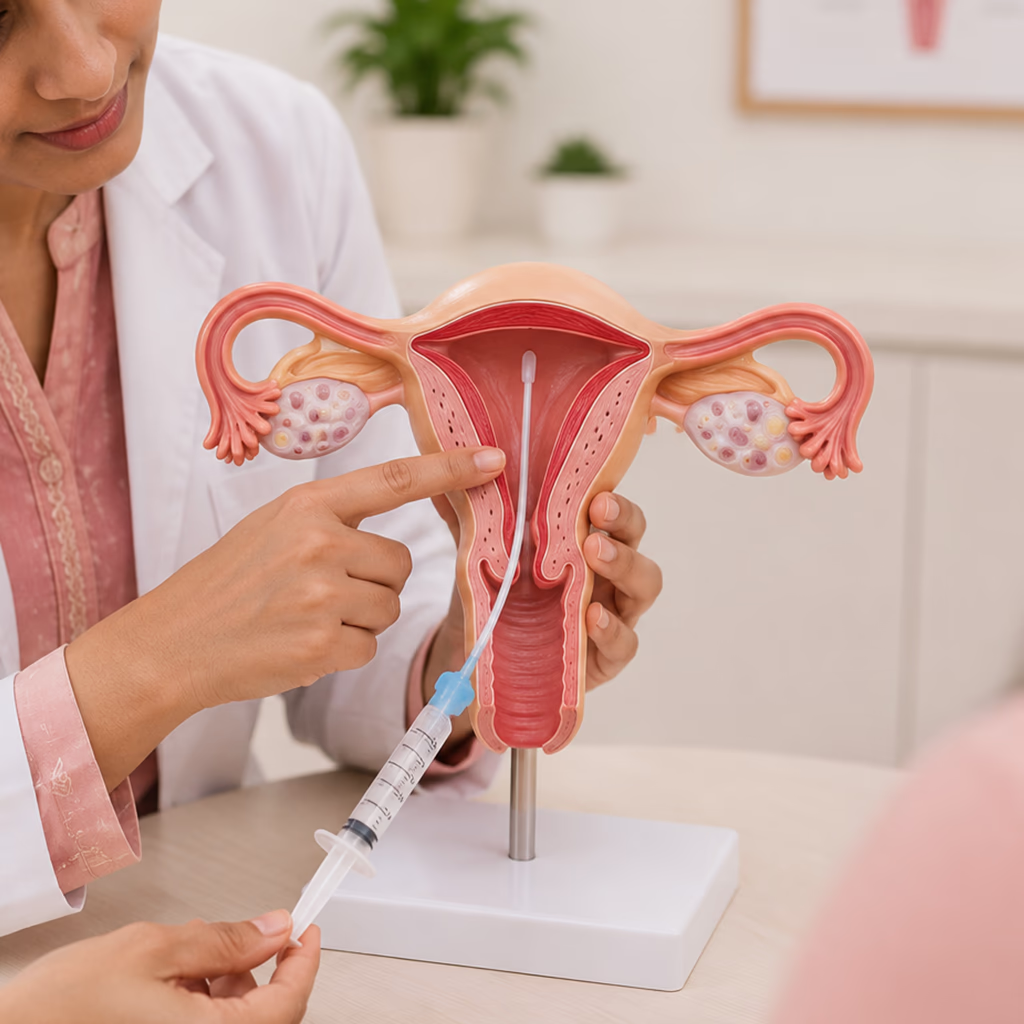
IUI (Intrauterine Insemination) is a fertility procedure in which washed and concentrated sperms are inserted into the uterus using a fine, sterile catheter. This allows the sperms to reach the fallopian tubes more easily, improving the chances of fertilising the egg.
The Goal
The goal of IUI is to bypass the cervix and place the sperms closer to the egg, increasing the number of sperms that reach the egg and improving the chances of conception.
Indications — Who Can Benefit?
For many couples, IUI is the first step before moving to advanced treatments like IVF / ICSI.
Eligibility And Required Tests
Prerequisites For The Woman
IUI works best when ovulation is regular or correctable with mild medicines.
- Regular or correctable ovulation
- At least one open fallopian tube (confirmed by HSG, SIS/SSG, or diagnostic laparoscopy)
- Normal uterine cavity (ultrasound or hysteroscopy)
- Balanced hormonal profile (AMH, TSH, prolactin, FSH and LH, HbA1c)
- No active pelvic infection
Prerequisites For The Male Partner
Semen analysis thresholds commonly used for IUI:
- Sperm count ≥ 10–15 million/ml
- Motility ≥ 30%
- Progressive motility ≥ 20–25%
Lower values may still allow IUI, but success rates reduce. Severe male factor infertility may require ICSI instead.
Tests Commonly Required Before IUI
For the woman
- Ultrasound pelvis
- AMH
- Day 2–3 FSH, LH, estradiol
- TSH, prolactin
- HSG / tubal patency test
- Complete blood count
- Blood group
For the male
- Semen analysis (1–2 times)
- Culture and sensitivity (if needed)
- Infectious disease screening
Infectious screening — both
- HIV
- HBsAg
- HCV
- VDRL
Infectious screening is mandatory for all fertility treatments.
The Procedure — Step By Step
- 1
Initial evaluation
A detailed fertility assessment is done for both partners, including hormonal tests, semen analysis, and ultrasound scans.
- 2
Ovarian stimulation
Mild medicines may be used to stimulate egg development. Ultrasounds monitor follicle growth and lining.
- 3
Timing ovulation
Once the follicle reaches the ideal size, an HCG trigger is given. IUI is usually performed about 36 hours later.
- 4
Semen collection and preparation
A semen sample is processed in the lab to wash and concentrate the healthiest sperms.
- 5
Insemination
Prepared sperms are gently placed into the uterus using a fine catheter. It is quick and usually painless.
- 6
Post-procedure rest
Rest for about 10–15 minutes. Most people resume normal activity the same day.
- 7
Pregnancy test
A blood test is usually done about 14 days after IUI.
Success Rate
Advantages And Risks
Advantages Of IUI
- Simple and minimally invasive
- Usually painless and completed in a few minutes
- Affordable compared to IVF
- Can be combined with ovulation induction
- Often the first step before IVF / ICSI
The right candidate selection and timing are the biggest factors that influence outcomes.
Risks And Limitations
- Success rates are lower than IVF, especially with age
- Mild cramping or spotting can occur after the procedure
- Risk of multiple pregnancy if stimulation is used
- Not recommended when both tubes are blocked
- May not help severe male factor infertility
Your doctor will recommend IUI only when it fits your fertility profile and improves your chances safely.
Questions We Hear Often
Is IUI painful?
How many IUI cycles should we try before IVF?
What is the success rate of IUI?
Can IUI be done if tubes are blocked?
Do we need bed rest after IUI?
Considering IUI?
Our fertility team will confirm eligibility, guide you on the right tests, and plan an evidence-based next step. Led by Dr. Rama Sofat, Dr. Amit Sofat and Dr. Ruchika Sofat — Dr. Rama Sofat Hospital, Ludhiana.