
Laparoscopic Tubal Surgeries · Ludhiana, Punjab

Tubal Recanalisation

Restoring natural fertility after family planning surgery — advanced microsurgical and laparoscopic techniques to reconnect the fallopian tubes and give women a second chance at natural conception.

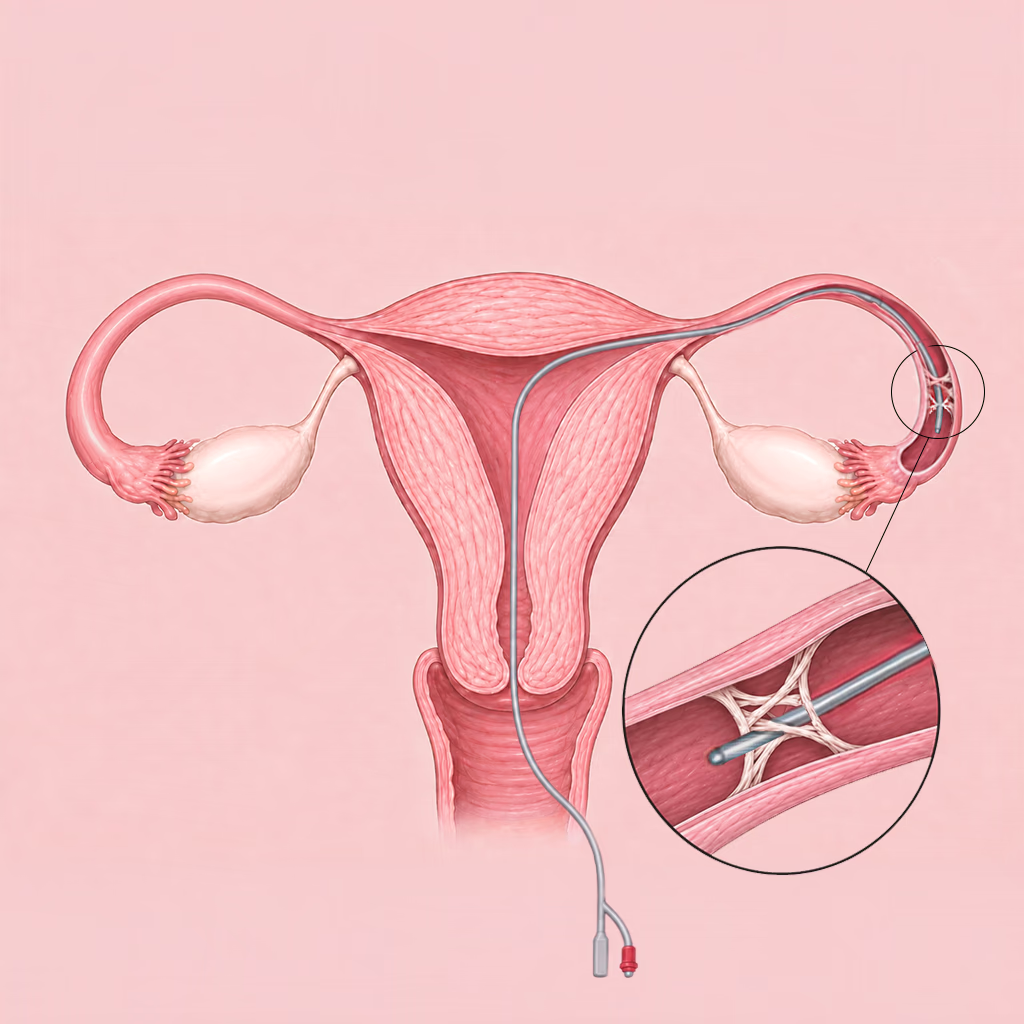
About tubal recanalisation

Tubal Recanalisation, also known as tubal reversal surgery, is a fertility-restoring procedure performed to reconnect the fallopian tubes after a previous tubal ligation (family planning). Many women who have undergone sterilisation may later desire another child due to a change in personal or family circumstances. Tubal recanalisation offers these women a second chance at natural conception, allowing the egg and sperm to meet naturally without IVF. At Dr. Rama Sofat Hospital, we specialise in both traditional microsurgical and advanced laparoscopic techniques to restore fertility safely and effectively.

Indications for tubal recanalisation

Tubal recanalisation is recommended for women who:

  • Have undergone tubal ligation and now wish to conceive naturally
  • Have blockage in fallopian tubes due to prior surgery or infection
  • Have healthy uterine cavity and ovaries
  • Are below 40 years of age with good ovarian reserve

Diagnosis & evaluation

Before the surgery, our specialists perform detailed fertility assessment to ensure the best outcomes:

  • Hysterosalpingography (HSG): X-ray dye test to locate the blockage
  • Ultrasound / Sonosalpingography: To assess uterus and ovaries
  • Hormone Tests (AMH, FSH, LH): To check egg reserve and quality
  • Semen Analysis: To confirm partner's fertility
  • Counselling & Discussion: To choose between recanalisation and IVF depending on age and tubal health

Types of tubal recanalisation procedures

01

Traditional (open) microsurgical recanalisation

This classical method is performed through a mini-laparotomy (small abdominal incision) under general anaesthesia.

  • The surgeon identifies the blocked segment of each tube
  • The scarred or tied portion is removed
  • The healthy ends of the tubes are rejoined with fine microsutures under magnification
  • Dye is injected to confirm tubal patency before closure

This method remains highly effective, especially in cases where laparoscopic access may not be ideal — such as very short tubes or extensive adhesions. It requires a short hospital stay of 1–2 days, and recovery takes around 10–14 days.

02

Laparoscopic tubal recanalisation (minimally invasive)

This advanced approach uses keyhole incisions and high-definition cameras for precision repair.

  • 2–3 tiny incisions are made on the abdomen
  • A laparoscope provides a magnified view of the fallopian tubes
  • Using microsurgical instruments, the blocked or tied ends are delicately reconnected (re-anastomosed)
  • Tubal patency is checked with a dye test before closure

Benefits of laparoscopic recanalisation:

  • Minimal pain and blood loss
  • Quick recovery (back to routine in 5–7 days)
  • Fewer adhesions and higher precision
  • Same-day discharge in most cases

Expected benefits

Restores natural conception ability
Avoids repeated IVF cycles
Safe and uterus-preserving
Success rates up to 60–70% in selected patients
Emotionally fulfilling — allows conception the natural way

Fertility considerations

  • Ideal candidates are women under 40 with good ovarian function.
  • Conception often occurs within 6–12 months post-surgery.
  • There's a small risk of ectopic pregnancy, hence early pregnancy monitoring is essential.
  • If both tubes are too damaged or short, IVF remains an alternative option.

When to see a doctor

Consult a fertility specialist if you:

  • Have had tubal ligation but wish to conceive again
  • Have tubal blockage shown on scans
  • Want to explore options other than IVF
  • Have regret after family planning or a change in life circumstances

Myths vs facts

Myth

Fact

Tubal ligation is permanent.

In many cases, the tubes can be successfully reconnected.

IVF is the only way to conceive after family planning.

Tubal recanalisation allows natural conception in eligible women.

Recovery is long and painful.

With laparoscopic surgery, recovery is quick and minimally painful.

The success rate is low.

Success rates can reach 60–70% in well-selected patients.

Frequently asked questions

What are the chances of pregnancy after recanalisation?

Pregnancy rates vary between 50–70%, depending on age, site of block, and remaining tubal length.

Which is better — laparoscopic or open recanalisation?

Laparoscopy offers faster recovery and fewer adhesions, while open microsurgery may be suitable for complex cases.

How soon can I try for pregnancy?

You can usually start trying after 2–3 menstrual cycles post-surgery.

What are the risks?

Risks are minimal but include a small chance of ectopic pregnancy and re-blockage.

Why choose Dr. Rama Sofat Hospital

Over 55 years of trust and expertise in fertility restoration
Pioneering laparoscopic & microsurgical techniques in North India
High success rates with meticulous surgical precision
Personalised fertility assessment and counselling
Comprehensive aftercare to optimise natural conception

Book your consultation

If you've had tubal ligation and wish to conceive again, book your consultation at Dr. Rama Sofat Hospital, Ludhiana — restoring your natural fertility safely.

Book Now