Rest And Immediate Care
Short rest post-transfer (30–60 minutes). Complete bed rest is not necessary — gentle daily activity promotes healthy blood flow. Avoid strenuous exercise, heavy lifting, smoking, alcohol, and caffeine.
How It Works
IVF involves fertilising a woman's egg with a man's sperm outside the body in a highly controlled laboratory, then transferring the best embryo back into the uterus. Every cycle is carefully monitored and customised to the patient's hormonal profile, ovarian reserve, and medical history.

Preparing well before starting your IVF journey can make a significant difference in your results and overall experience. A healthy body and a calm mind create the best foundation for success.
Schedule a pre-IVF consultation
Your doctor reviews medical and fertility history, conducts baseline blood tests and scans, discusses your treatment plan, and explains timelines, costs, and realistic success rates.
Complete recommended investigations
Hormone profile (AMH, FSH, LH, TSH, prolactin), semen analysis, ultrasound or hysteroscopy, and infectious disease screening for both partners.
Focus on a fertility-friendly diet
Include fresh fruits, vegetables, whole grains, proteins, iron-rich foods, and omega-3 sources. Avoid processed food, excess caffeine, alcohol, and smoking.
Manage stress and mental health
Practice yoga, meditation, deep breathing, or light walks. Our counsellors are available to support you through each phase.
Take prescribed supplements
Folic acid, vitamin D and B12, and coenzyme Q10 or antioxidants may be recommended to improve egg quality — follow dosage exactly as advised.
Maintain a healthy lifestyle
Sleep 7–8 hours regularly, exercise moderately, keep weight in a healthy range (BMI 18–25), and avoid toxins and unnecessary medications.
Understand the IVF timeline
Knowing each step from stimulation to transfer reduces anxiety. Our team provides a personalised calendar so you are well informed throughout.
Prepare emotionally as a couple
IVF is a shared journey. Discuss expectations openly, support each other, and celebrate small milestones together.
Ovarian stimulation
Daily hormone injections (FSH and LH analogues) for 8–12 days stimulate multiple eggs. Regular ultrasound scans and blood tests monitor follicle growth and estrogen levels. When follicles reach 18–20 mm, a trigger shot (hCG or GnRH agonist) is given. Egg retrieval is scheduled 34–36 hours later.
Egg retrieval (OPU)
A short, minimally invasive procedure under light anaesthesia. A thin needle guided by transvaginal ultrasound aspirates eggs from each follicle. Takes 15–30 minutes; patients return home the same day. Mild cramping or bloating is common post-procedure.
Sperm collection and preparation
On the same day, the male partner provides a semen sample. If needed, surgically retrieved sperm (TESA/PESA) or donor sperm is used. The sample is washed and processed to select the healthiest, most motile sperms.
Fertilisation and embryo culture
In standard IVF, eggs and sperm are placed together in a petri dish and allowed to fertilise overnight. Where sperm quality is a concern, ICSI injects a single sperm into each egg. Embryos are cultured for 3–5 days in advanced incubators — Day 3 (cleavage) or Day 5 (blastocyst) — and graded daily by embryologists.
Embryo transfer
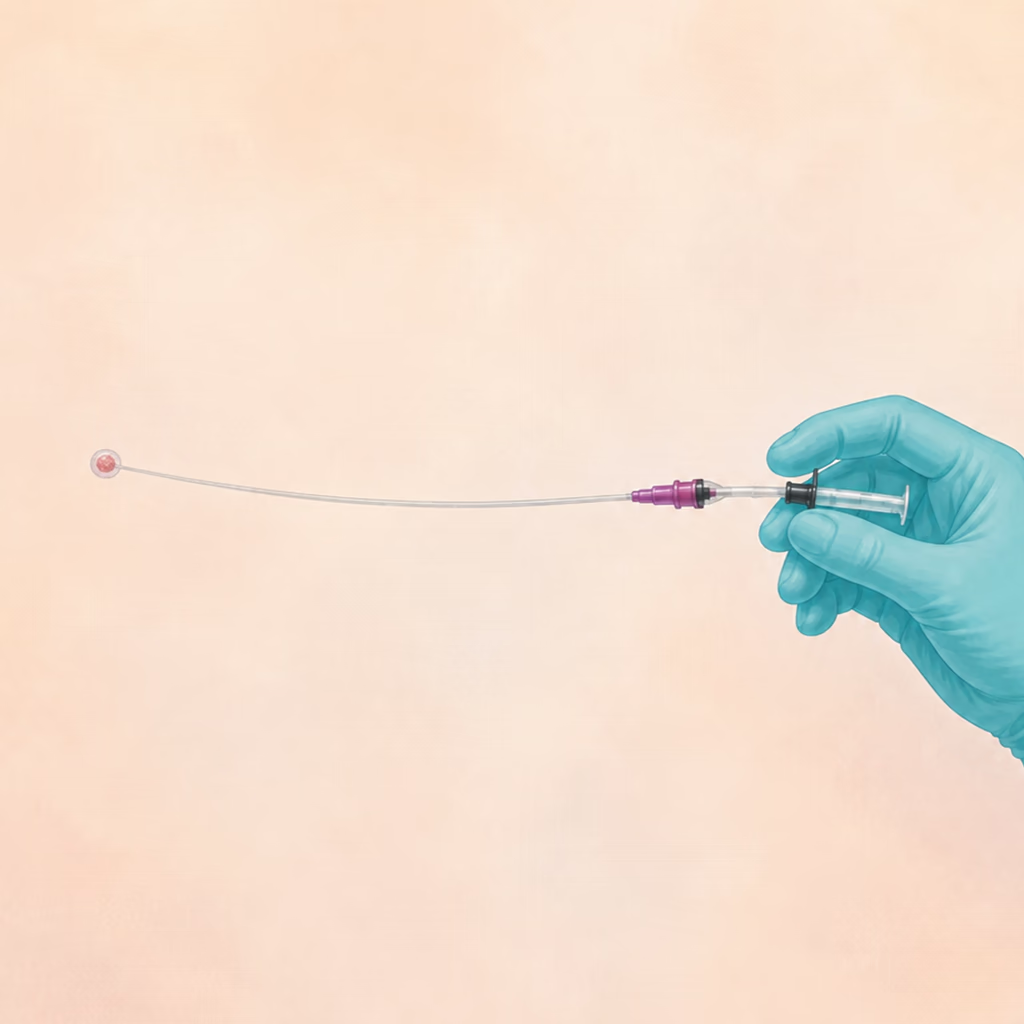
A selected high-quality embryo is gently transferred into the uterus using a fine catheter under ultrasound guidance. The procedure is painless, requires no anaesthesia, and takes only a few minutes. Remaining embryos may be frozen for future use.
The two weeks following embryo transfer are crucial for implantation and early pregnancy development. This luteal phase determines whether the treatment results in a successful pregnancy.
Short rest post-transfer (30–60 minutes). Complete bed rest is not necessary — gentle daily activity promotes healthy blood flow. Avoid strenuous exercise, heavy lifting, smoking, alcohol, and caffeine.
Progesterone (vaginal tablets, oral pills, or injections) and sometimes estrogen prepare the uterus for implantation. Medications are usually continued until the pregnancy test or up to 10–12 weeks of gestation.
Implantation typically occurs between Day 6–10 after transfer. Some women experience mild cramps or light spotting (implantation bleeding) — this is normal and not a cause for concern.
Eat protein-rich foods, leafy greens, and fruits. Stay hydrated. Practice light yoga, meditation, or deep breathing. Avoid raw papaya, pineapple, and excessive sugar.
Continue all prescribed medications faithfully. Avoid early urine pregnancy tests — they can show false results due to residual hormones. Every IVF journey is unique; stay positive and seek counselling if needed.
Approximately 12–14 days after transfer, a blood test confirms pregnancy. A positive result is followed by an ultrasound after 7–10 days. If negative, the team reviews the cycle and plans next steps such as frozen embryo transfer (FET).
A negative pregnancy test after an IVF cycle can feel heartbreaking — but it is not the end of your parenthood journey. Many couples who experience a failed cycle go on to conceive successfully in their very next attempt.
Common reasons a cycle may not work include embryo factors (chromosomal abnormalities), endometrial factors (thin lining), immunological or hormonal issues, timing mismatches, or lifestyle influences. Our fertility experts review every detail before planning the next step.
Every setback in IVF is not a failure — it's feedback. It helps your doctor fine-tune the next cycle and bring you closer to your baby.
We'll explain every step clearly and plan the safest, most effective protocol for you. Dr. Rama Sofat Hospital, Ludhiana.