Anaesthesia & Setup
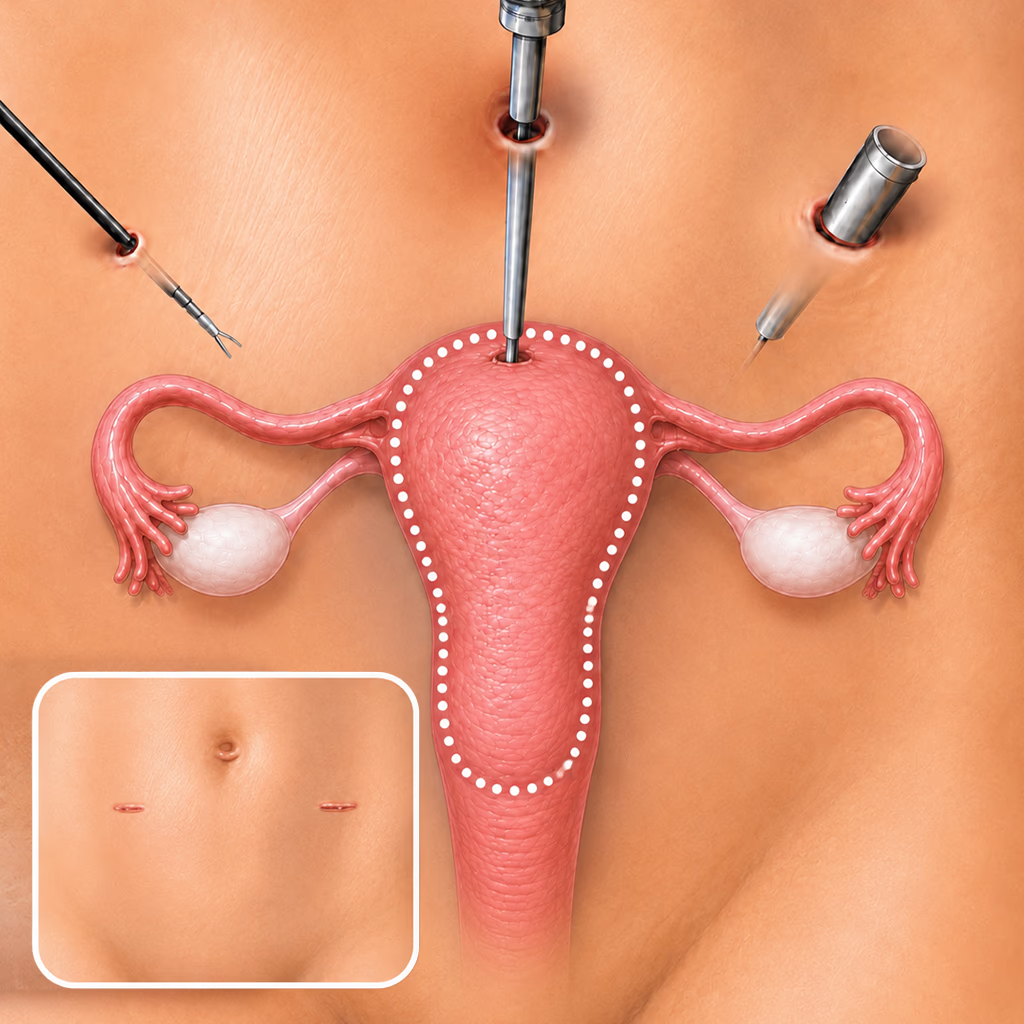
The patient is given general anaesthesia. Tiny (0.5-1 cm) incisions are made near the belly button and lower abdomen.
Laparoscopic Uterine Surgeries · Ludhiana, Punjab
Minimally invasive uterus removal through tiny keyhole incisions — using advanced 4K HD laparoscopic systems for extreme precision, minimal pain, faster recovery, and virtually invisible scars.

A woman's uterus is the centre of her reproductive and hormonal health. However, for some women, conditions such as fibroids, adenomyosis, endometriosis, chronic pelvic pain, or abnormal uterine bleeding can severely impact their physical wellbeing and emotional balance.
When medicines and conservative therapies fail to bring lasting relief, surgery may become the most effective and life-changing option.
At Dr Rama Sofat Hospital, Ludhiana, we offer Total Laparoscopic Hysterectomy (TLH) — a minimally invasive uterus removal surgery performed through tiny keyhole incisions instead of a large abdominal cut. Using advanced 4K HD and high-definition laparoscopic systems, our surgeons can view and operate on the pelvic organs with extreme precision and safety.
This modern approach ensures minimal pain, faster recovery, and virtually invisible scars, allowing women to heal comfortably and return to their routines quickly with renewed confidence and quality of life.
Total Laparoscopic Hysterectomy (TLH) is a keyhole surgical procedure in which the uterus (and sometimes the cervix) is completely removed using laparoscopic instruments. Small incisions are made on the abdomen, through which a laparoscope (tiny camera) and fine surgical instruments are inserted. The camera projects magnified 4K HD visuals of the uterus and surrounding organs onto a screen, enabling the surgeon to perform the procedure with unmatched accuracy.
Depending on the medical condition, the fallopian tubes or ovaries may also be removed during the same surgery.
Unlike traditional open hysterectomy, TLH offers better visualisation, minimal trauma, and a quicker return to normal life — making it the gold standard approach in modern gynaecologic surgery.
Your doctor may recommend TLH if you suffer from any of the following conditions:
At Dr Rama Sofat Hospital, every indication is evaluated through detailed clinical assessment, imaging, and counselling before recommending surgery.
At our hospital, TLH is performed under general anaesthesia by our expert laparoscopic surgeons using world-class 4K HD imaging systems.
The patient is given general anaesthesia. Tiny (0.5-1 cm) incisions are made near the belly button and lower abdomen.
A laparoscope (thin telescope with a high-definition camera) is inserted, providing a magnified view of the pelvic organs.
The uterus is carefully separated from its surrounding tissues — blood vessels, ligaments, and the cervix — using fine, precise laparoscopic instruments.
Blood vessels are sealed using energy-based devices to prevent bleeding. The uterus is then removed either through the vaginal canal or in small sections via the laparoscopic ports.
The surgeon checks all areas for complete haemostasis (no bleeding), and the small skin incisions are closed with dissolvable stitches.
The entire procedure typically takes 1-2 hours, and most patients can walk within a few hours after surgery.
Most patients feel significantly better within a few days of surgery.
Typical Recovery Timeline
Post-Operative Care Tips
Our care team at Dr Rama Sofat Hospital provides personalised guidance at every step — management to emotional support — transition back to full health, ensuring a smooth recovery.
After TLH, a woman cannot conceive, since the uterus is removed. However, if the ovaries are preserved, they continue to produce hormones naturally, preventing early menopause and maintaining bone, heart, and skin health.
In cases where ovaries need removal due to disease or age-related factors, our specialists discuss hormonal therapy options to ensure hormonal balance and overall wellbeing.
Every patient receives detailed counselling before surgery to understand the implications on fertility, hormones, and long-term health.
Yes, TLH is a highly safe, effective, and standardised procedure when performed by skilled laparoscopic surgeons.
It is possible to do TLH in patients with previous 2/3 caesarean deliveries or in patients with large sized uterus at Dr Rama Sofat Hospital owing to the high-end expertise, advanced equipment like vessel sealing devices, 4K HD cameras, power morcellators etc.
No, only small, almost invisible keyhole scars remain after complete healing.
Most patients are discharged within 24-48 hours of surgery.
Not if your ovaries are preserved. Menopause only occurs if both ovaries are removed.
You can walk the same day, resume light activities in a week, and return fully to normal life in 2-3 weeks.
Yes, after 6-8 weeks, once internal healing is complete and your doctor approves.
If you're considering hysterectomy for fibroids, adenomyosis, or other conditions, book your consultation with Dr Amit Sofat and Dr Ruchika Sofat at Dr Rama Sofat Hospital, Ludhiana.