Advanced IVF Treatments
Specialised IVF Offerings
At Dr. Rama Sofat Hospital, we understand that every fertility journey is unique. For many couples, standard IVF may not be enough to achieve a successful pregnancy and that's where our advanced reproductive technologies come in.

Specialised IVF Offerings At Dr. Rama Sofat Hospital, Ludhiana
At Dr. Rama Sofat Hospital, we understand that every fertility journey is unique. For many couples, standard IVF may not be enough to achieve a successful pregnancy and that's where our advanced reproductive technologies come in.
Our specialised IVF techniques, including Blastocyst Culture, Laser-Assisted Hatching, and Reproductive Genetics, help improve fertilisation, embryo development, and implantation ensuring every patient receives the most advanced care possible.
1. Blastocyst Culture And Transfer
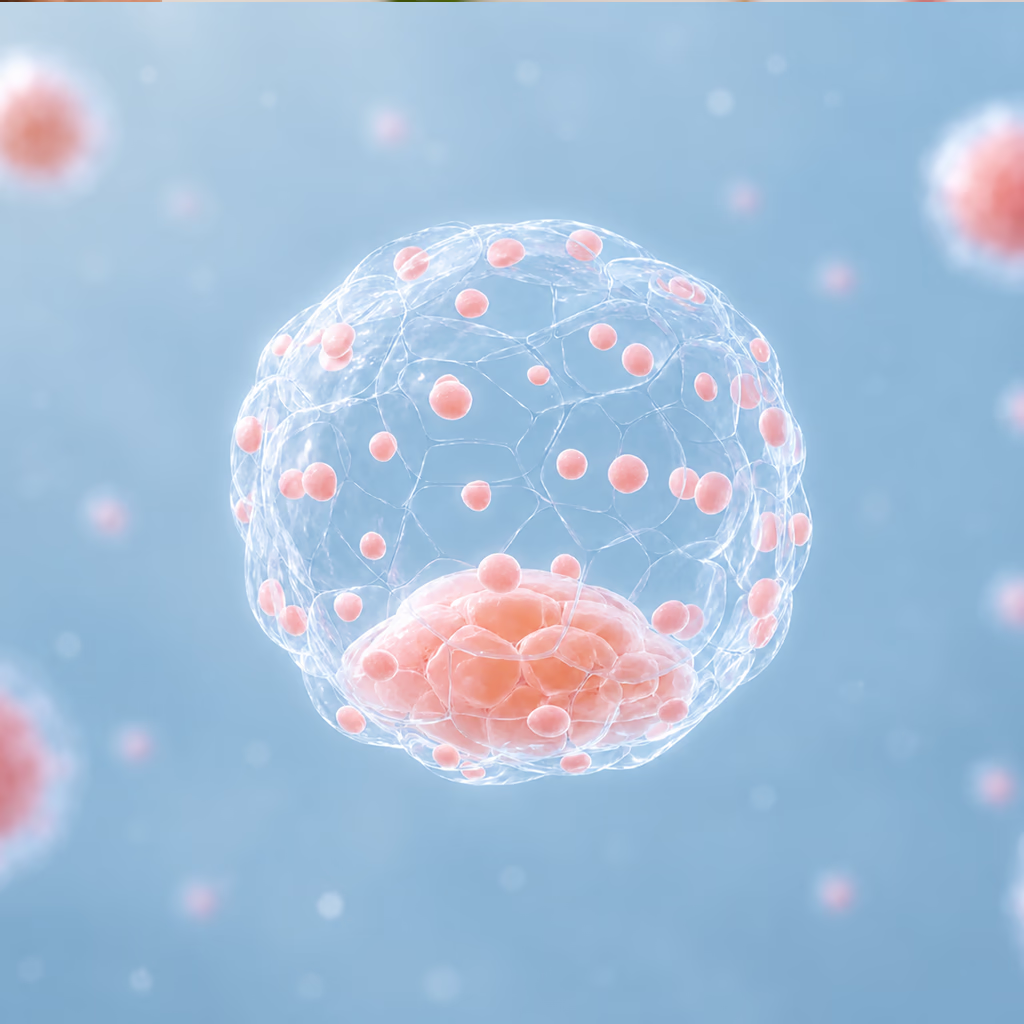
Blastocyst Culture is an advanced IVF technique in which embryos are grown in the laboratory for five to six days after fertilisation until they reach the blastocyst stage. A blastocyst is a more developed form of the embryo, consisting of around 100-150 cells, and is ready for implantation into the uterine lining.
How It Works
After egg fertilisation (through IVF or ICSI), the embryos are cultured under specialised conditions that mimic the natural environment of the fallopian tube and uterus. By Day 5 or 6, only the healthiest embryos continue to develop into blastocysts.
These high-quality blastocysts are then carefully selected and transferred into the uterus.
Benefits Of Blastocyst Transfer
- Higher implantation rates: Only the most viable embryos reach the blastocyst stage, improving pregnancy success.
- Reduced risk of multiple pregnancies: Allows safe single embryo transfer (SET) without lowering the chances of success.
- Better embryo selection : Embryologists can observe development and choose embryos with the best potential.
- Improved synchronisation: The blastocyst stage aligns naturally with the uterine lining's readiness for implantation.
At Dr. Rama Sofat Hospital, our IVF laboratory uses intensive monitoring, customised culture media, and controlled lab conditions to support optimal blastocyst growth leading to consistently high success rates.
2. Laser-Assisted Hatching (LAH)
For an embryo to implant successfully, it must first "hatch" out of its outer shell (zona pellucida) before attaching to the uterus.In some cases,especially in older women or those with previous IVF failures, the shell may be too thick or hard, making hatching difficult.
Laser-Assisted Hatching (LAH) is a precision technique that uses a highly focused laser beam to create a small opening in the outer shell of the embryo, allowing it to hatch and implant more easily.
How It Works
Using a non-contact infrared laser, the embryologist creates a microscopic hole in the zona pellucida under a powerful microscope. This is done carefully without touching or harming the embryo. The hatched embryo is then transferred to the uterus for implantation.
Benefits Of Laser-Assisted Hatching
- Improves implantation rate, especially in women above 35 years.
- Increases success in cases of repeated IVF failures.
- Helpful in frozen-thawed embryo transfers, where the shell tends to harden.
- Completely safe and non-invasive, performed by highly skilled embryologists.
At Dr. Rama Sofat Hospital, we use non-contact infrared laser technology for absolute precision and safety, ensuring every embryo receives the best chance to implant successfully.
3. Reproductive Genetics (PGT/PGS/PGD)
Sometimes, infertility or recurrent pregnancy loss may be caused by genetic abnormalities in the embryo. Even when the embryo looks healthy under the microscope, chromosomal errors can prevent implantation or cause miscarriage.
Reproductive Genetics through Preimplantation Genetic Testing (PGT) helps detect such abnormalities before the embryo is transferred to the uterus.
Types Of PGT
- 1. PGT-A (Aneuploidy Screening): Checks for the correct number of chromosomes to reduce miscarriage risk.
- 2. PGT-M (Monogenic Disorders): Screens for specific inherited genetic diseases like Thalassemia, Cystic Fibrosis.
Benefits Of Reproductive Genetic Testing
- Ensures transfer of chromosomally normal embryos (euploid embryos).
- Reduces miscarriage and increases live birth rates.
- Prevents genetic disorders in the baby.
- Improves overall implantation rates in IVF cycles.
- Ideal for older women, couples with recurrent IVF failures, or those with a family history of genetic diseases.
At Dr. Rama Sofat Hospital, we collaborate with leading genetic laboratories using Next Generation Sequencing (NGS) and Microarray Analysis to ensure 99% accuracy and world-class results.
Why Choose Dr. Rama Sofat Hospital For Advanced IVF Treatments
- Legacy of 55+ years in fertility and women's health care.
- Advanced embryology laboratory with HEPA air filtration and controlled humidity.
- Expert embryologists trained in international fertility centres.
- Personalised fertility care.Every advanced procedure is recommended only when medically beneficial.
- Transparent communication, ethical treatment protocols. and emotional support throughout your journey.
4. Endometrial Receptivity Analysis (ERA) - Personalising Embryo Transfer For Higher IVF Success
At Dr. Rama Sofat Hospital, Ludhiana, we believe that successful conception isn't only about healthy eggs and embryos it's equally about the uterus being ready to receive the embryo.
This readiness is called endometrial receptivity, and identifying the exact time when the uterus is most receptive can make a huge difference in IVF outcomes.
That's where Endometrial Receptivity Analysis (ERA) plays a key role.
What Is ERA?
Endometrial Receptivity Analysis (ERA) is an advanced genetic test that determines the precise window of implantation (WOI) - the short time frame when the uterine lining (endometrium) is optimally prepared for the embryo to attach.
Every woman's endometrial development is slightly different. While most standard embryo transfers are timed according to general patterns, the ERA test identifies your personal timing, allowing for a personalised embryo transfer that matches your unique biology.
How Is ERA Performed?
- Endometrial Biopsy:
A small tissue sample is taken from the uterine lining, usually after a few days of progesterone exposure (during a mock cycle).
- Genetic Analysis:
The sample is analysed using advanced RNA sequencing technology, which evaluates the expression of over 200+ genes involved in endometrial receptivity.
- Report & Interpretation:
The result identifies whether the endometrium is:
- Receptive that is ready for implantation.
- Pre-receptive - not yet ready.
- Post-receptive- past the optimal window.
- Personalised Embryo Transfer (PET):
If the report shows a shifted window, the next IVF cycle can be timed exactly according to your unique implantation window improving the chances of success.
Who Should Consider ERA Testing?
ERA is especially recommended for:
- Women with repeated IVF or embryo transfer failures despite good-quality embryos.
- Patients with unexplained infertility
- Women with normal uterine anatomy but poor Implantation outcomes.
- Couples who want a personalised, evidence-based approach to embryo transfer.
Benefits Of ERA In IVF
- Improves implantation rates by identifying your exact receptive window.
- Reduces failed IVF attempts caused by mistimed embryo transfers.
- Enables individualised treatment, making every transfer scientifically timed.
- Non-invasive and safe, requiring only a small biopsy.
- Enhances confidence and reduces emotional stress by adding precision to the process.
ERA At Dr. Rama Sofat Hospital
At Dr. Rama Sofat Hospital, we integrate ERA testing with our Blastocyst Transfer and Embryo Monitoring programs to provide a truly personalised fertility plan.
Our collaboration with leading reproductive genetic laboratories ensures accurate, reliable, and timely ERA reports for every patient.
We combine science and compassion to give every embryo the best chance to implant and grow into a healthy pregnancy.
5. Sperm DNA Fragmentation Test (SDF Test) - Evaluating Sperm Quality Beyond Routine Semen Analysis
At Dr. Rama Sofat Hospital, Ludhiana, we understand that male fertility is about more than just sperm count or motility. Even men with a "normal" semen analysis can face fertility challenges due to damage in the DNA of sperm cells - an issue not detected by routine tests.
The Sperm DNA Fragmentation Test (SDF Test) offers a deeper, more accurate look into the genetic integrity of sperm, helping us identify hidden causes of infertility and tailor treatment for better pregnancy outcomes.
What Is The Sperm DNA Fragmentation Test?
The SDF Test measures the percentage of sperm with fragmented or damaged DNA.
DNA fragmentation refers to breaks or abnormalities in the genetic material within the sperm head.
These DNA breaks can interfere with fertilisation, embryo development, and implantation - leading to failed IVF cycles, miscarriages, or unexplained infertility.
Unlike routine semen tests that assess only sperm count, shape, and movement, the SDF test evaluates sperm health at a molecular level, offering critical insights into male fertility potential.
Why DNA Integrity Matters In Fertility
The sperm's DNA carries half the genetic material of the future embryo.
When this DNA is damaged, it can:
- Reduce fertilisation rates
- Cause poor embryo development
- Increase the risk of early pregnancy loss or miscarriage
- Lead to failed ICSI or IVF cycles despite good-quality eggs
Therefore, assessing DNA integrity helps your fertility specialist choose the best course of treatment-from lifestyle improvements to advanced lab interventions.
Causes Of Sperm DNA Fragmentation
Several factors can contribute to sperm DNA damage, including:
- Oxidative stress (caused by smoking, pollution, poor diet)
- Advanced age
- Varicocele (enlarged veins in the scrotum)
- Infections or inflammation in the reproductive tract
- High testicular temperature or fever
- Exposure to toxins, radiation, or pesticides
- Unhealthy lifestyle habits like alcohol use or stress
Who Should Undergo The SDF Test?
The SDF test is particularly recommended for:
- Couples with unexplained infertility
- Repeated IVF or ICSI failures despite good embryo quality
- Recurrent miscarriages
- Male partners above 40 years
- Men with poor lifestyle habits or occupational exposure to heat/chemicals
- Varicocele or genital tract infections history
How Is The SDF Test Done?
- Semen Collection:
A fresh semen sample is collected after 2-5 days of abstinence.
- Laboratory Analysis:
Using advanced molecular techniques like TUNEL, SCSA, or Comet assay, the DNA integrity of thousands of sperm cells is evaluated.
- Result Interpretation:
A low DNA fragmentation index (DFI) indicates healthy sperm.
A high DFI suggests DNA damage, which may reduce conception chances.
- Treatment Planning:
Based on the results, your fertility specialist may recommend:
- Antioxidant therapy and lifestyle changes
- Varicocele repair (if present)
- Use of Testicular Sperm (TESA/TESE) for ICSI since sperm retrieved directly from the testes usually have lower DNA damage.
Benefits Of The SDF Test
- Detects hidden causes of male factor infertility
- Improves IVF and ICSI outcomes through targeted treatment
- Helps prevent recurrent pregnancy losses
- Enables use of healthier sperm for fertilisation
- Provides personalised treatment for each couple
SDF Testing At Dr. Rama Sofat Hospital
At Dr. Rama Sofat Hospital, our fertility specialists and embryologists use cutting-edge diagnostic tools to assess sperm DNA fragmentation accurately.
By combining SDF testing with ICSI, PGT, and ERA, we ensure that every embryo has the best genetic and biological foundation for success.
Our male fertility program focuses not just on testing - but on healing and improving sperm health naturally, for long-term reproductive wellness.
Book a consultation
Advanced IVF treatments and specialised offerings at Dr. Rama Sofat Hospital, Ludhiana.