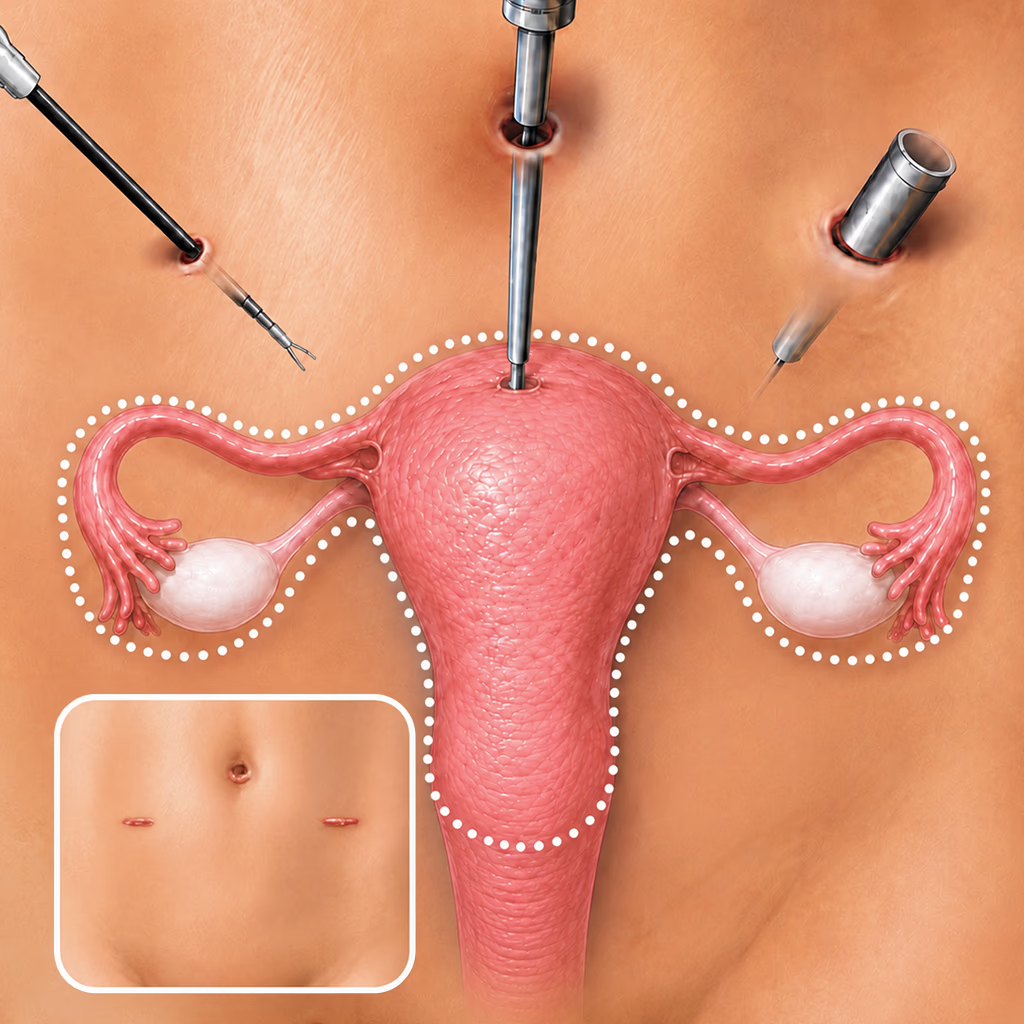
Keyhole Incisions
Small keyhole incisions are made on the abdomen.
Laparoscopic Uterine Surgeries · Ludhiana, Punjab
Precision, safety, and compassionate cancer care — minimally invasive radical hysterectomy for gynaecological cancers, ensuring complete cancer clearance with faster healing, minimal scarring, and enhanced recovery.

A diagnosis of gynaecological cancer can be life-changing but with today's medical advancements, women can now receive effective treatment without compromising comfort, dignity, or recovery. Radical Laparoscopic Hysterectomy (RLH) is a minimally invasive surgical procedure that allows precise removal of the uterus and surrounding cancerous tissues through tiny keyhole incisions. This technique offers faster healing, minimal scarring, and shorter hospital stay while maintaining oncological safety and surgical excellence.
At Dr Rama Sofat Hospital, Ludhiana, our team of expert laparoscopic and oncogynecologic surgeons specialises in performing complex procedures like RLH with utmost precision. Each surgery is tailored to ensure complete cancer clearance, minimal trauma, and enhanced postoperative recovery — helping women regain health, strength, and confidence.
A radical laparoscopic hysterectomy involves the removal of the uterus, cervix, upper part of the vagina, and surrounding tissues (parametrium and uterosacral ligaments). Depending on the stage and spread of disease, pelvic lymph nodes may also be removed for cancer staging and prevention of recurrence.
Unlike traditional open surgery, RLH is performed using a laparoscope (a thin camera) and specialised instruments inserted through small abdominal incisions. This enables magnified visualisation of pelvic structures, allowing surgeons to operate with greater precision and safety.
Radical laparoscopic hysterectomy is primarily recommended for women diagnosed with:
You should consult a gynaecologic oncologist if you experience:
Early evaluation ensures timely treatment and higher chances of complete recovery.
Before surgery, a detailed pre-operative assessment is essential to ensure safety and optimal outcomes. This includes:
At Dr Rama Sofat Hospital, every patient's case is discussed in a multidisciplinary tumour board, ensuring that the surgical plan aligns with global oncologic standards.
Radical Laparoscopic Hysterectomy is performed under general anaesthesia and typically lasts 2-4 hours, depending on complexity.
Small keyhole incisions are made on the abdomen.
A laparoscope is inserted to provide high-definition visuals of internal organs.
The surgeon carefully dissects and removes the uterus, cervix, upper vaginal segment, and parametrium, while protecting nearby structures like the bladder, ureters, and blood vessels.
Pelvic lymph nodes are excised if indicated.
The removed tissue is extracted safely through a small incision or vaginal route.
Incisions are closed neatly, resulting in minimal scarring.
The laparoscopic approach ensures precise tumour removal, less blood loss, and faster healing compared to conventional open surgery.
While rare, possible risks include:
Our hospital follows strict intra-operative safety protocols and advanced energy devices to minimise these risks and ensure optimal recovery.
Most patients are able to walk within 12-24 hours after surgery and can go home within 2-3 days.
Post-operative care includes:
Emotional and psychological support is also provided through our women's wellness program to help patients recover holistically.
Since the uterus and cervix are removed, pregnancy is not possible after a radical hysterectomy. However, ovarian function may be preserved in younger women if the ovaries are left intact, maintaining hormonal balance and preventing early menopause.
At Dr Rama Sofat Hospital, we discuss all fertility-preserving and hormonal protection options before surgery so that patients can make informed decisions aligned with their personal goals.
Yes, multiple studies confirm that laparoscopic radical hysterectomy offers the same cancer control as open surgery, with faster recovery and fewer complications.
Most patients are discharged within 2-3 days, depending on their condition.
Light activities may be resumed in 1-2 weeks, while complete recovery usually takes 4-6 weeks.
Only if the ovaries are removed. If retained, hormonal function continues normally.
If you or a loved one has been diagnosed with gynaecological cancer, consult our expert team at Dr Rama Sofat Hospital, Ludhiana for advanced, compassionate care.